Colorprint introduces the new UV Curing ink series
Conventional inks sometimes present limitations. For example, when a very fast drying time is required, or when there are adhesion issues on non-absorbent substrates such as metallized surfaces and plastic materials.
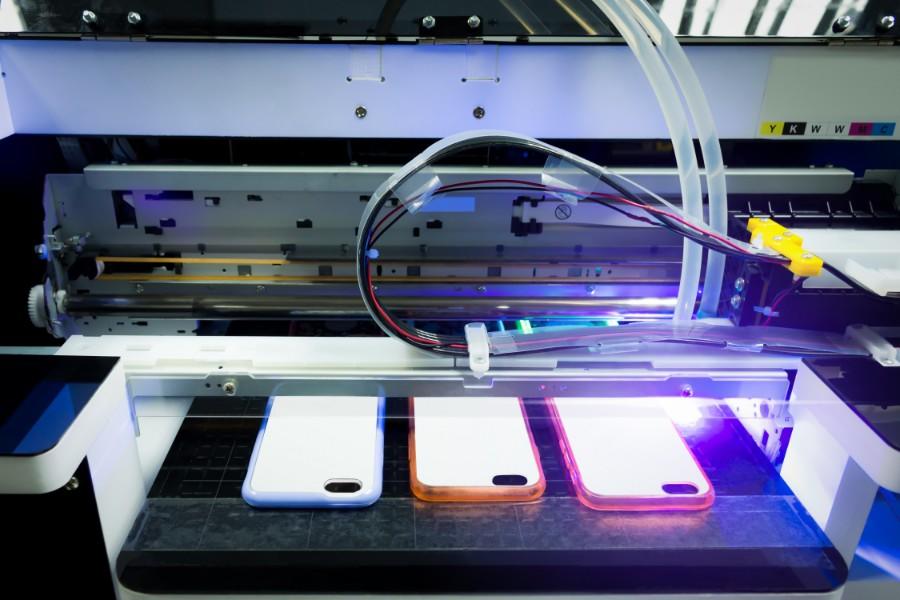
Technically, UV printing utilizes lamps located at the exit of the printing substrate that emit UV radiation. The combination with UV-sensitive inks leads to instantaneous polymerization, drastically reducing drying times and delivering excellent brilliance.
Offset printing with UV inks is characterized by a photochemical reaction triggered by ultraviolet light as it comes into contact with the monomers, photoinitiators, and additives contained within the ink.
However, the use of special inks and coatings is essential; these must contain binding resins that differ from conventional products, along with specific additional elements known as "photoinitiators."
Traditional ink consists of a solid part, called pigment, and a fluid part, called the vehicle. In addition to these, other products such as oils, resins, and special additives are added during the manufacturing process.
UV inks, on the other hand, generally consist of four components: monomers, oligomers, pigments (and other adhesives), and photoinitiators. The latter are essential for the drying process; they are activated through exposure to UV lamps and, by absorbing light and energy, they generate free radicals. These trigger polymerization, allowing it to propagate through the ink film until it reaches the printing substrate.There are two primary advantages to using these types of inks:
Furthermore, the properties of these inks make it possible to achieve prints with greater color strength, high rub resistance (even without varnish), chemical resistance, and faster production rates, as well as a reduction in machine cleaning.
This is why we have developed three UV ink lines in our laboratories, specifically dedicated to different printing techniques:
Each of these lines addresses specific needs and has different fields of application, yet they all share the following strengths:
All Colorprint UV lines comply with current regulations (Reach 1907/2006, CLP 1272/2008, EU 453/2010, RoHS 2002/95), are formulated without heavy metals, and are low-migration products.
Safe, guaranteed products to fully leverage the potential of UV printing.